Corvey Abbey, also known as the Princely Abbey of Corvey, stands as one of Germany’s most important historical religious sites. The former Benedictine abbey lies in North Rhine-Westphalia and represents a remarkable connection between medieval history, architecture, and religious heritage. Furthermore, the abbey played an important role as an independent ecclesiastical territory within the Holy Roman Empire.
Corvey became one of the few self-governing princely abbeys during the Late Middle Ages. The abbey maintained its own administration and controlled a large territory. Later, in 1792, Corvey gained the status of a prince-bishopric. However, the German mediatisation process in 1803 ended its political independence, and the territory joined the newly formed Principality of Nassau-Orange-Fulda.
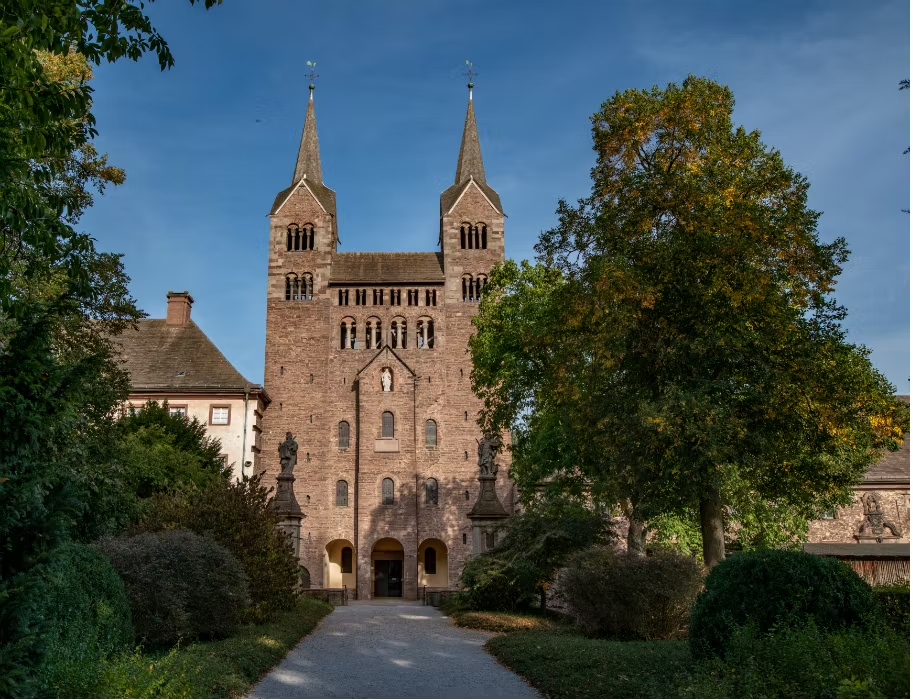
The abbey originally developed between 822 and 885. Over time, builders and craftsmen transformed the complex, especially during the Baroque period. As a result, Corvey displays a unique combination of Carolingian and later architectural styles. Moreover, the site preserves one of the oldest surviving examples of a westwork in Europe.
The westwork represents the most significant architectural feature of Corvey Abbey. Its design influenced later Romanesque and Gothic church architecture across western Europe. Additionally, the interior contains rare Carolingian wall paintings that show scenes from ancient mythology with Christian interpretations. These artworks provide valuable information about medieval religious thought and artistic traditions.
The former abbey church, dedicated to Saints Stephen and Vitus, continues to attract visitors because of its historical importance and architectural beauty. Furthermore, the site reflects the cultural achievements of the Benedictine community that shaped the region for centuries.
In 2014, UNESCO recognized the former abbey church as a World Heritage Site. Today, Corvey remains a major destination for history enthusiasts, pilgrims, and travelers who wish to explore one of Westphalia’s most remarkable medieval monuments.
Abbey and Cathedral Church of Sts. Stephen and Vitus, Höxter-Corvey, Germany
Airways
The nearest airport is Paderborn Lippstadt Airport, located approximately 60 km from Corvey Abbey. Another nearby airport is Hannover Airport, located around 120 km away. Visitors can travel from these airports to Höxter by train, bus, or taxi services.
Railways
The nearest railway station is Höxter Rathaus railway station, which is approximately 3 km from Corvey Abbey. Regular regional train services connect Höxter with nearby towns and major cities, allowing convenient access to the cathedral and abbey complex.
Roadways / Bus Connectivity
Corvey Abbey is well connected by local buses and road transport from Höxter and surrounding areas. The site is approximately 3 km from Höxter town center and can be reached by bus, taxi, or private vehicles. Visitors can also travel by road from nearby cities such as Paderborn, Kassel, and Hanover.
Map Location
Mass Schedule
Sunday : 8:30 AM
Book Now
Open
Open hours today: 10:00 am - 6:00 pmToggle weekly schedule


 Verified listing