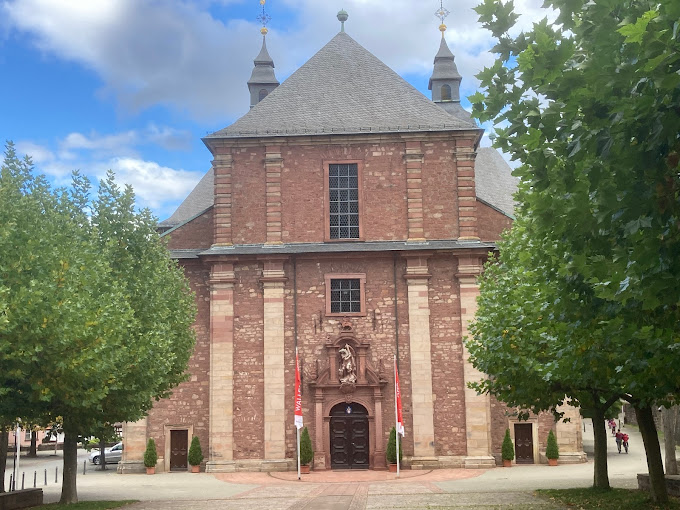
The Pilgrimage Basilica of St. George, also called the Basilica of the Holy Blood, stands in Walldürn, Baden-Württemberg. Built between 1698 and 1728, the church combines Baroque architecture with immense spiritual significance for pilgrims and believers. The basilica’s origins trace back to 1330, when the Blood Miracle of Walldürn profoundly shaped its religious and historical importance. This miraculous event began a pilgrimage tradition, eventually making WalldürnGermany’s most prominent eucharistic pilgrimage destination for centuries.
Furthermore, pilgrims from across the globe continue visiting the basilica to honor the miracle and deepen their connection to faith. The church’s interior features stunning frescoes, intricate sculptures, and ornate altarpieces, creating an awe-inspiring atmosphere for visitors. Additionally, Pope John XXIII recognized its significance by designating it as a Basilica Minor in 1962, further elevating its status.
The basilica fosters unity and devotion, bringing people together through shared faith and a sense of spiritual belonging. For generations, it has served as a sacred place for worship, reflection, and connection to longstanding religious traditions. Moreover, visitors are drawn to its art, history, and the miraculous story that continues to inspire countless individuals.
Through its role as a pilgrimage site, the basilica unites people from diverse backgrounds and reinforces shared spiritual values. Each visit offers a deeper appreciation for the enduring power of faith and the strength of sacred traditions. By continuing to attract pilgrims, the Pilgrimage Basilica of St. George preserves its legacy as a beacon of hope and devotion. It remains a significant site for those seeking inspiration, renewal, and a connection to a rich history of faith and belief.


 Verified listing