For more than six centuries, between 1228 and 1859, the church served as the cathedral of the Diocese of Lavant. Consequently, it shaped ecclesiastical authority, pastoral leadership, and regional identity for surrounding communities. The church anchored religious administration throughout the Lavant Valley.
Historical records mention a parish in the Lavanttal as early as the year 888. Furthermore, sources confirm the first reliable reference to a church structure in 1145. These early records demonstrate long-standing Christian presence and organized worship.
In 1225, church leaders founded an Augustinian monastery in Sankt Andrä. Shortly afterward, authorities elevated the monastery church to cathedral status in 1228. As a result, the newly created Diocese of Lavant gained an administrative and spiritual center.
However, major ecclesiastical change occurred in 1859. Church authorities transferred the diocesan seat to St. John the Baptist Church in Marburg an der Drau. Meanwhile, they reassigned Carinthian parishes to the Diocese of Gurk.
Nevertheless, St. Andrew’s Church retained strong symbolic value for local believers. Today, it continues to serve as an active Roman Catholic parish church. Moreover, it preserves architectural features reflecting centuries of worship.
Ultimately, St. Andrew’s Church represents continuity, faith, and regional heritage. Therefore, it remains a defining landmark in Sankt Andrä im Lavanttal. Its history reflects Carinthia’s evolving ecclesiastical landscape.
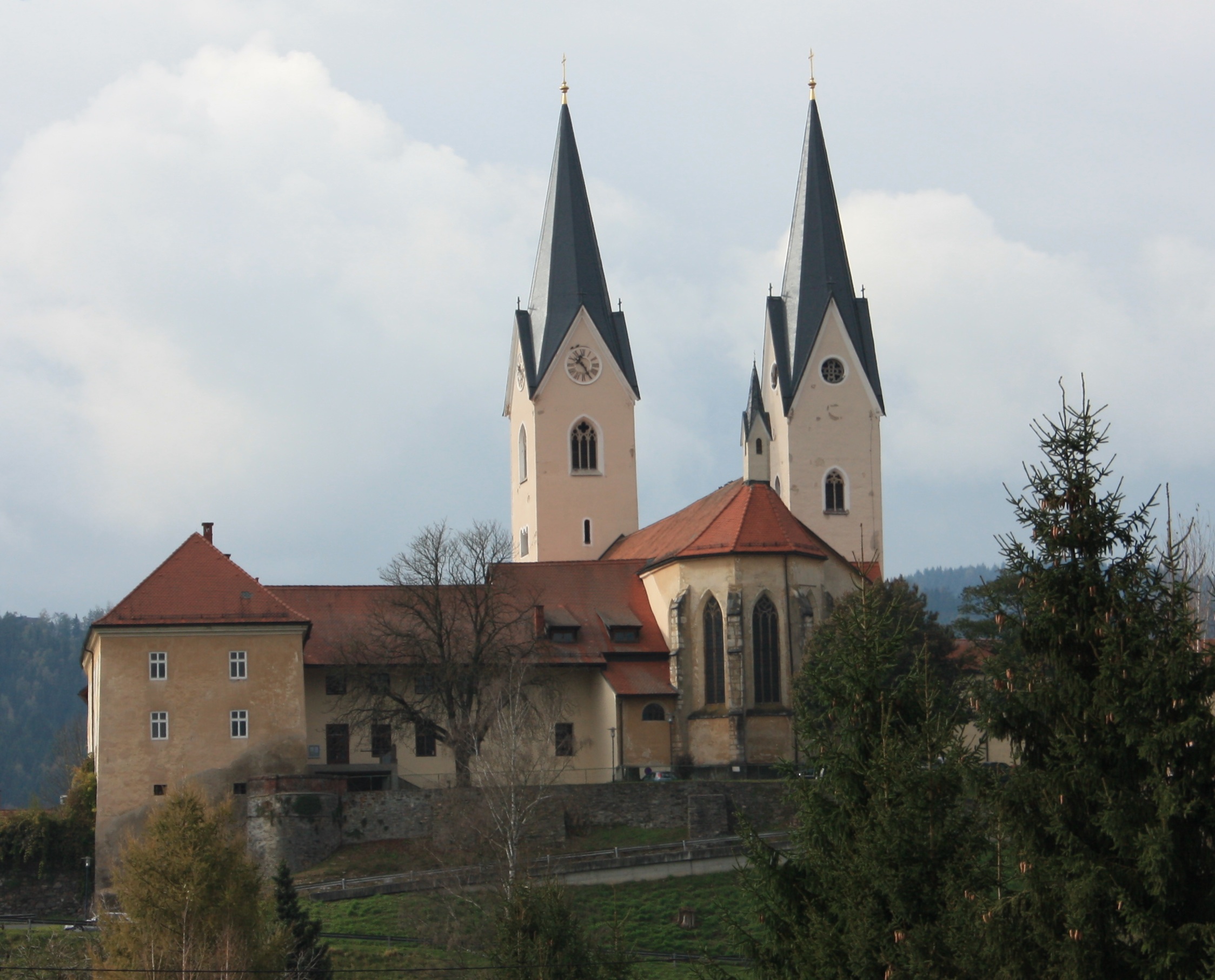
Cathedral of St. Andrew, Sankt Andrä im Lavanttal, Austria
Airways
The nearest airports are Klagenfurt Airport (approximately 60 km) and Graz Airport (around 120 km), providing access for both domestic and international travelers.
Railways
The nearest railway station is Wolfsberg Railway Station, located about 12 km from Sankt Andrä im Lavanttal, with regular train connections to Klagenfurt, Graz, and Vienna.
Roadways
Cathedral of St. Andrew is approximately 13 km from Wolfsberg Bus Station. It is about 60 km from Klagenfurt, 120 km from Graz, and 280 km from Vienna, making it easily accessible by regional and intercity bus services.


 Verified listing