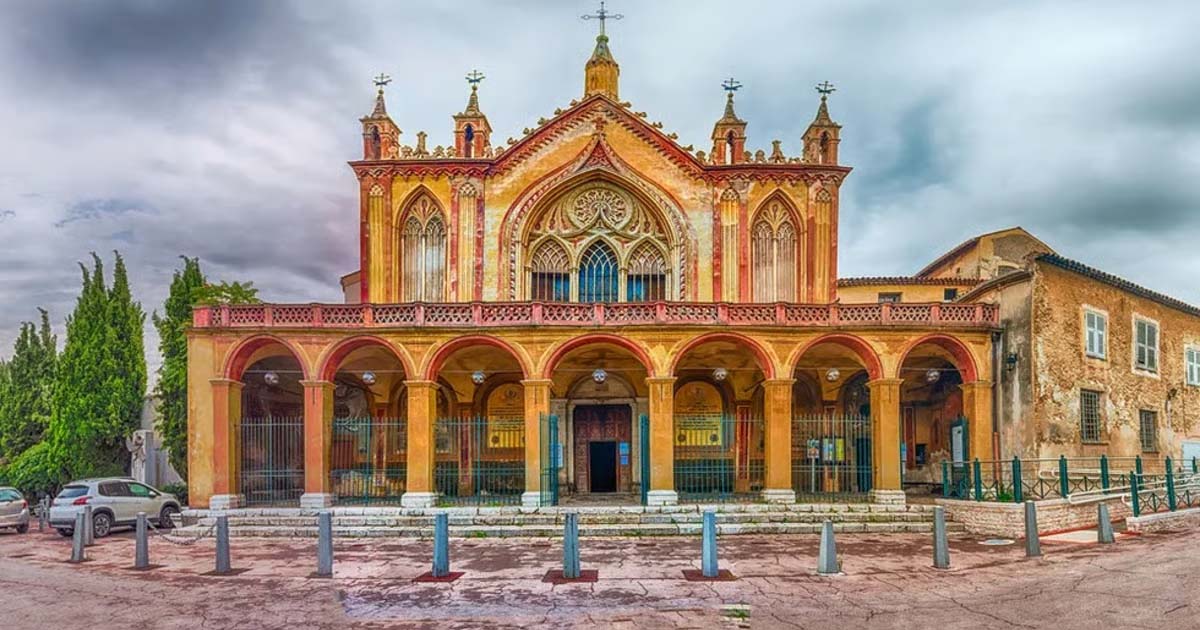
The Cimiez Cathedral, also called Cathédrale Sainte-Marie de Cimiez or Cathédrale Notre-Dame du Château, once stood on the hill of the Château de Nice, overlooking the city. It served as a major religious and cultural center, attracting worshippers, pilgrims, and visitors who sought both spiritual guidance and a view of the surrounding area. Because it held the bishop’s seat, the cathedral also functioned as the administrative center of the local diocese.
In 1590, the bishop moved his seat to the present NiceCathedral, which shifted the focus of religious life in the city. However, the Cimiez Cathedral remained part of the local spiritual community for some time. During the Siege of Nice in 1691, the cathedral suffered significant damage, which weakened its structure and limited its use. As a result, the church was demolished in 1706, ending its physical presence on the hill. Despite this, its history continues to interest historians, archaeologists, and scholars of religious architecture. Moreover, the site of the former cathedral and the castle hill remain important for visitors who want to explore Nice’s medieval heritage, enjoy panoramic city views, and reflect on the events that shaped the city’s religious institutions over the centuries.
Connectivity to the Cimiez Cathedral, Nice, France
Airways
The nearest major airport is Nice Côte d’Azur Airport, which handles domestic and international flights from many European cities. From the airport, you can take a taxi, rideshare, rental car, or public transport into central Nice and then continue toward Cimiez by bus or tram.
Railways
The main train stations serving Nice are Gare de Nice‑Ville and Nice – Gare CPZou. These stations connect Nice with other cities in France and the region by TER and long‑distance trains. From either station, visitors can walk, take a bus, tram, or taxi up to the Cimiez area where the cathedral once stood.
Roadways
Cimiez and its sites are accessible by local roads from central Nice. If you drive or take a taxi, you can follow city streets up toward Boulevard de Cimiez or Avenue Marx Dormoy, which lead into the Cimiez neighborhood. Public parking areas near Monastère de Cimiez and the Musée Matisse make it easy to stop and explore on foot.


 Verified listing