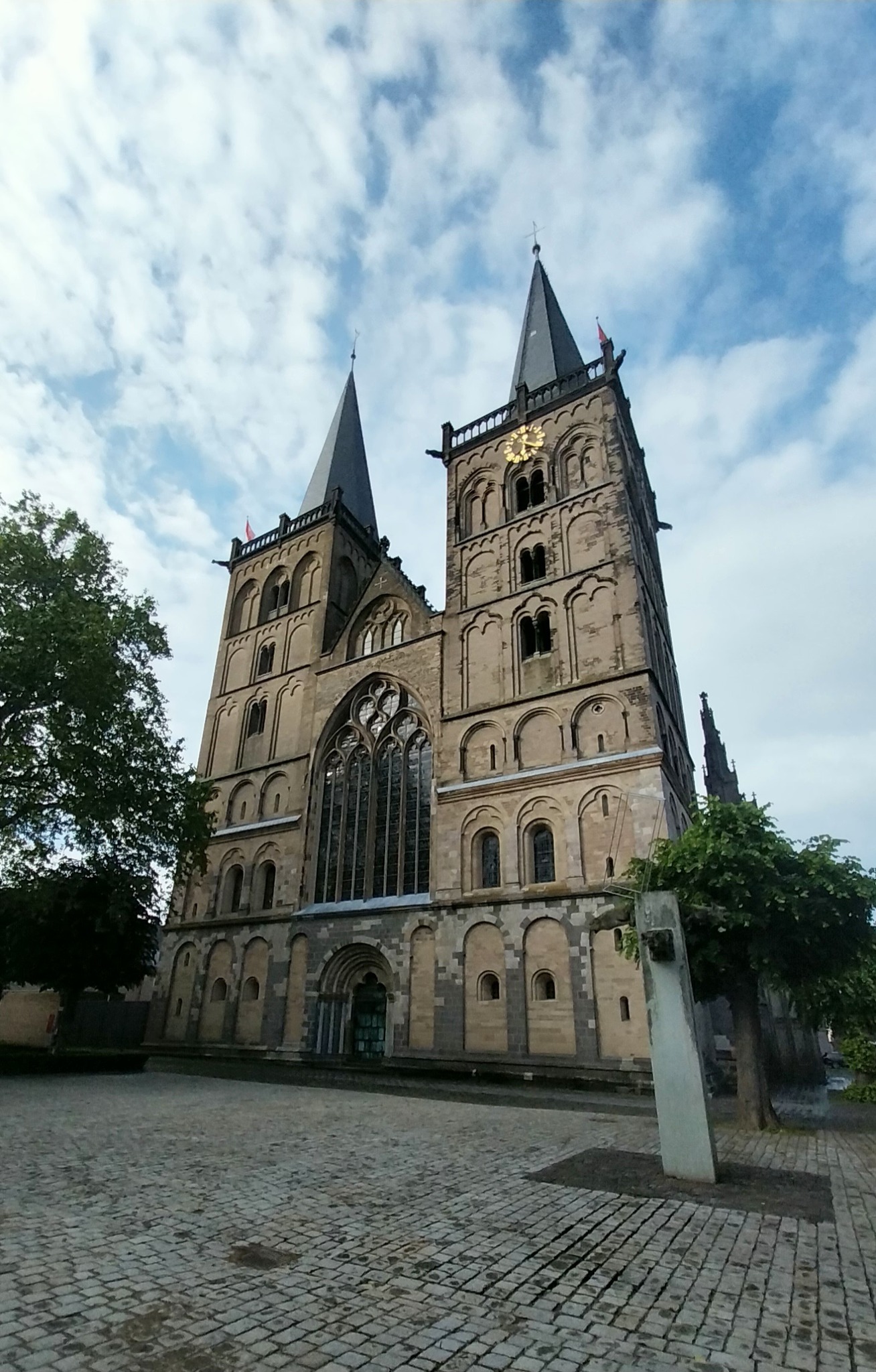
XantenCathedral (German: Xantener Dom), also known as St. Victor's Cathedral (German: St.-Viktor-Dom), stands in Xanten, a historic town in North Rhine-Westphalia, Germany. It is the largest church between Cologne and the North Sea. Despite being called a cathedral, it has never served as the seat of a bishop.
The cathedral’s construction began in the early Middle Ages, and it features a mix of Gothic and Romanesque styles. Over the centuries, the church underwent various renovations. The cathedral's tall spires and detailed façade make it a striking landmark.
In 1936, Pope Pius XI declared the cathedral a minor basilica, recognizing its spiritual and historical significance. The church is dedicated to St. Victor, a martyr whose story inspired the cathedral’s creation. Inside, visitors find religious relics, including stained glass windows and medieval sculptures.
XantenCathedral continues to attract visitors, who come to admire its historical and religious importance. It serves as an active place of worship and a cultural landmark. The cathedral reflects the rich history of Xanten and showcases medieval architectural achievements.
Airways
The nearest major airport to Xanten Cathedral is Düsseldorf Airport (DUS), located about 60 km away. From the airport, you can reach Xanten by train, car, or bus in about 1 to 1.5 hours.
Railways
Xanten does not have a direct train station, but the nearest station is Xanten Train Station. It is well-connected by regional trains to nearby cities such as Duisburg and Oberhausen. From the station, you can take a local bus or taxi to the cathedral, which is about 2 km away.
Roadways
Xanten is easily accessible by car via the A42 Autobahn, which connects the town to the larger road network. The cathedral is centrally located in the town, and there are parking facilities nearby for visitors. Several regional buses also serve Xanten, with stops close to the cathedral.
Map Location
Mass Schedule
Yet to Update
Book Now
Closed
Open hours today: 9:00 am - 12:00 pm, 3:00 pm - 5:00 pmToggle weekly schedule


 Verified listing