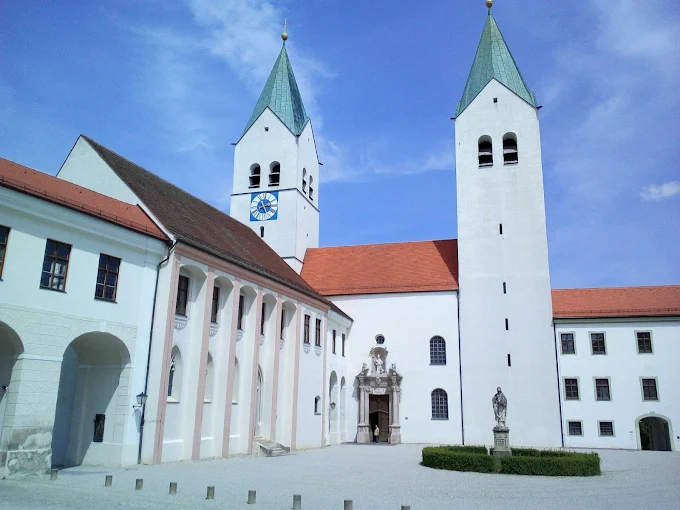
Freising Cathedral, also called Saint Mary and Corbinian Cathedral, stands in Freising, Bavaria. Additionally, locals call it Mariendom, and they value its Romanesque architectural style. Moreover, the structure reflects medieval design and long religious tradition in southern Germany. Furthermore, it sits in the historic center of Freising, and it attracts visitors who show interest in history, art, and faith. Consequently, the building continues to represent strong cultural identity and enduring architectural heritage. In addition, its design shows clear Romanesque features, including solid stonework and balanced proportions. Meanwhile, visitors often explore the cathedral along with nearby old town streets, and they enjoy the historical atmosphere. Therefore, the site connects Freising with broader Bavarian religious history and regional development.
Additionally, Freising Cathedral serves as the co-cathedral of the Catholic Archdiocese of Munich and Freising. Moreover, it supports major liturgical events, and it hosts regular worship activities throughout the year. Furthermore, the archdiocese uses the cathedral for ceremonies, gatherings, and community services that strengthen church unity. Consequently, it reinforces the connection between Freising and Munich within the ecclesiastical structure. In addition, pilgrims and tourists visit the site throughout the year, and they appreciate its spiritual atmosphere. Meanwhile, the cathedral also contributes to local tourism and cultural education in the region. Therefore, guides often explain its history and architectural details to visitors who seek deeper understanding.
Importantly, Pope Benedict XVI received his priestly ordination at Freising Cathedral. As a result, this event increased its global recognition and historical importance significantly. Moreover, visitors often come to learn about this strong connection with modern Catholic leadership. Consequently, the cathedral links local history with worldwide religious significance in a meaningful way. Additionally, pilgrims experience its sacred environment and reflect on its spiritual legacy. Furthermore, the building continues to inspire scholars, clergy, and tourists who study its past. Finally, Freising Cathedral remains a powerful symbol of faith, identity, and continuity, and it continues to attract people who value history, spirituality, and culture across generations.
Co-Cathedral of Our Lady’s Nativity, Freising, Germany
Airways
The nearest airport is Munich Airport, located about 10–15 km from Freising. It is the main international gateway for reaching the Co-Cathedral, with frequent trains, taxis, and bus services connecting the airport to Freising city.
Railways
The nearest railway station is Freising Railway Station, which is well connected to Munich and other major German cities through regional and S-Bahn services. From the station, the Co-Cathedral of Our Lady’s Nativity can be reached easily by local bus, taxi, or a short walk within the town.
Roadways
Freising is accessible by well-developed Bavarian road networks. Regular bus services operate between Munich, Munich Airport, and Freising. Travelers can also reach Freising by car via highways connecting it to Munich and surrounding towns, making road travel one of the most convenient options for visiting the Co-Cathedral.
Map Location
Mass Schedule
Yet to Update
Book Now
Closed
Open hours today: 7:30 am - 6:00 pmToggle weekly schedule


 Verified listing