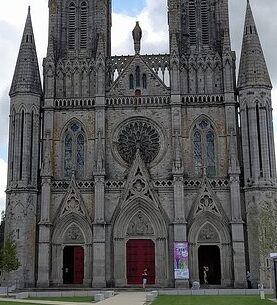
Avranches Cathedral, formally known as Cathédrale Saint‑André d'Avranches, once stood as a major Roman Catholic cathedral in Avranches, Normandy, France. Moreover, it served as the seat of the Bishop of Avranches, providing a central place for religious ceremonies, diocesan administration, and community gatherings. The cathedral featured Gothic architecture, including soaring arches and intricate stonework, which demonstrated the skill of medieval craftsmen. In addition, pilgrims and visitors often traveled from nearby regions to witness its beauty and to participate in religious life. These visits highlighted the cathedral’s significance in both spiritual and social contexts.
Furthermore, the cathedral is famous as the location where King Henry II of England performed public penance in 1172 for his role in the murder of Thomas Becket. The event drew nobles, clergy, and chroniclers from across Europe. Consequently, it emphasized the cathedral’s role as a stage for spiritual authority and political reconciliation. Observers carefully recorded the ceremony. Thus, the cathedral became a symbol of medieval power, devotion, and diplomacy, attracting attention from across the continent.
Unfortunately, the cathedral did not survive the French Revolution because revolutionary forces demolished it completely, leaving the site unbuilt. Afterward, under the Concordat of 1801, church authorities merged the Diocese of Avranches with the Diocese of Coutances to form the Diocese of Coutances and Avranches. Nevertheless, the cathedral’s historical and cultural significance continues to resonate. Scholars, tourists, and historians study its influence on religion, politics, and medieval architecture. Therefore, its legacy remains a vital part of Normandy’s heritage and memory.

 Verified listing